Schools Programme
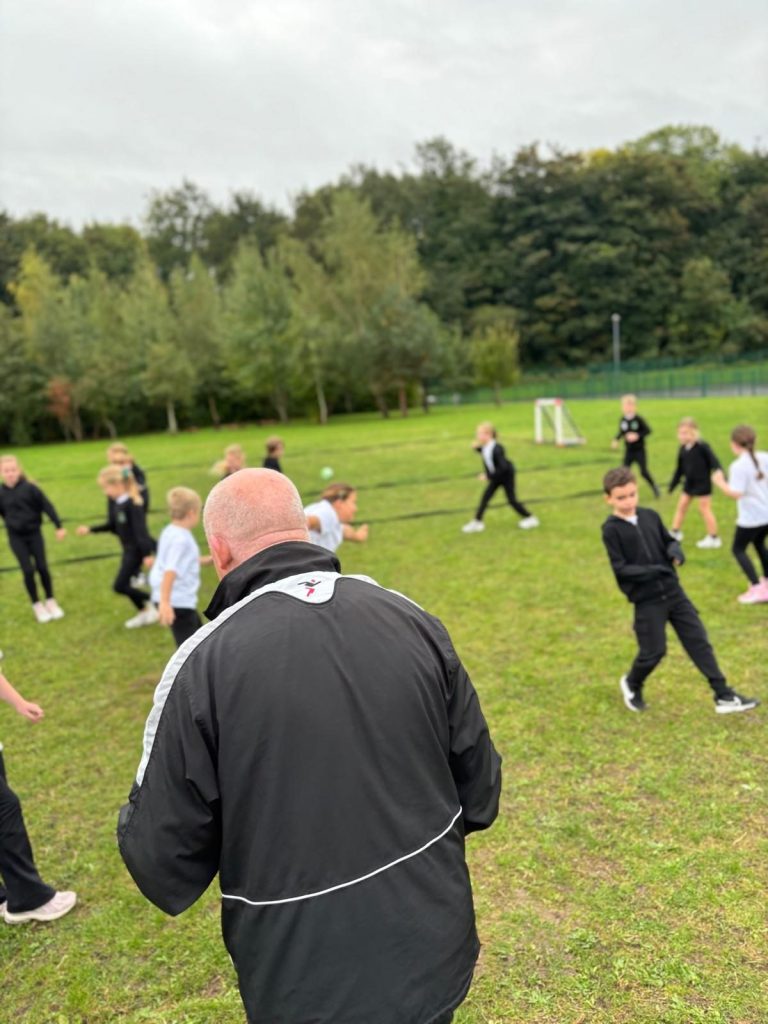
Our Schools Programme is fully inclusive and designed to maximise participation, ensuring every child is engaged, supported, and inspired. Delivered by experienced coaches, our high quality sessions develop fundamental movement skills, confidence, teamwork, and resilience while promoting a lifelong love of physical activity.
Aligned with National Curriculum outcomes and Ofsted priorities, we support pupils’ physical development, wellbeing, and positive behaviour through fun, structured, and engaging sport.
Schools Session Plans
Use our ready-to-deliver session plans, engaging video resources, and expert teacher training to bring these proven, Ofsted aligned practices into your school with confidence. Together, they provide clear structure, practical guidance, and hands-on support making it easy to turn evidence based ideas into effective, everyday practice.
School PE Video Resources
All of our videos are grounded in sound scientific research, proven practice, and are aligned with Ofsted expectations. Some videos use animation to make complex ideas clear and engaging, particularly as school ready resources for staff and pupils. Together, this video suite showcases evidence-informed, inspection aligned practices translated into practical, accessible tools that schools can confidently use.
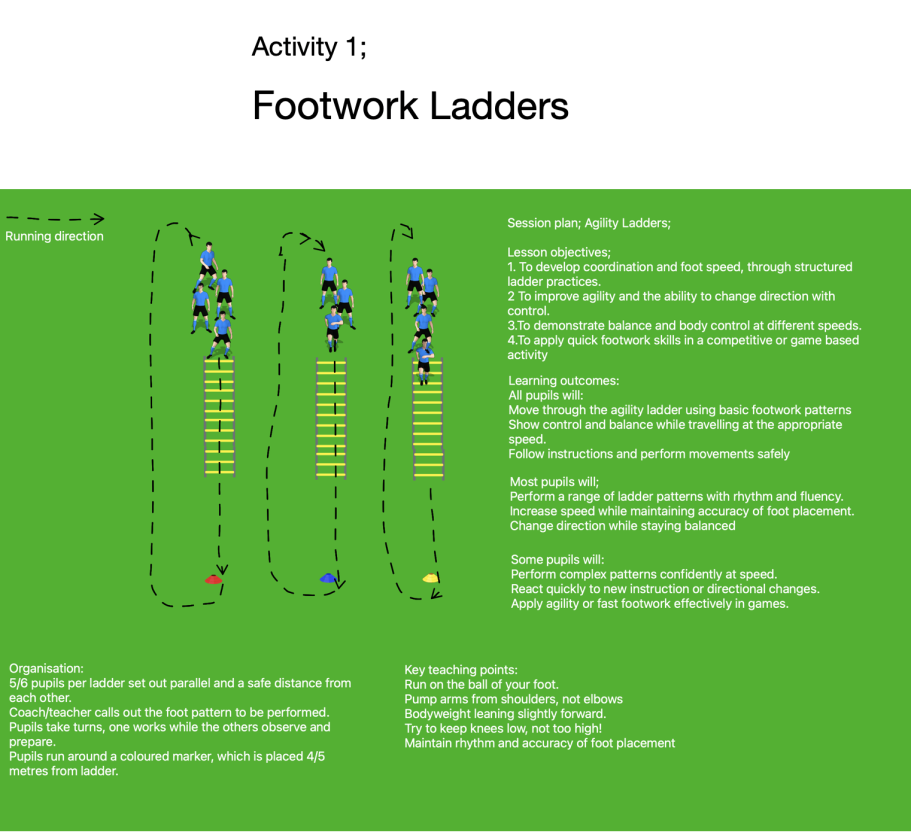
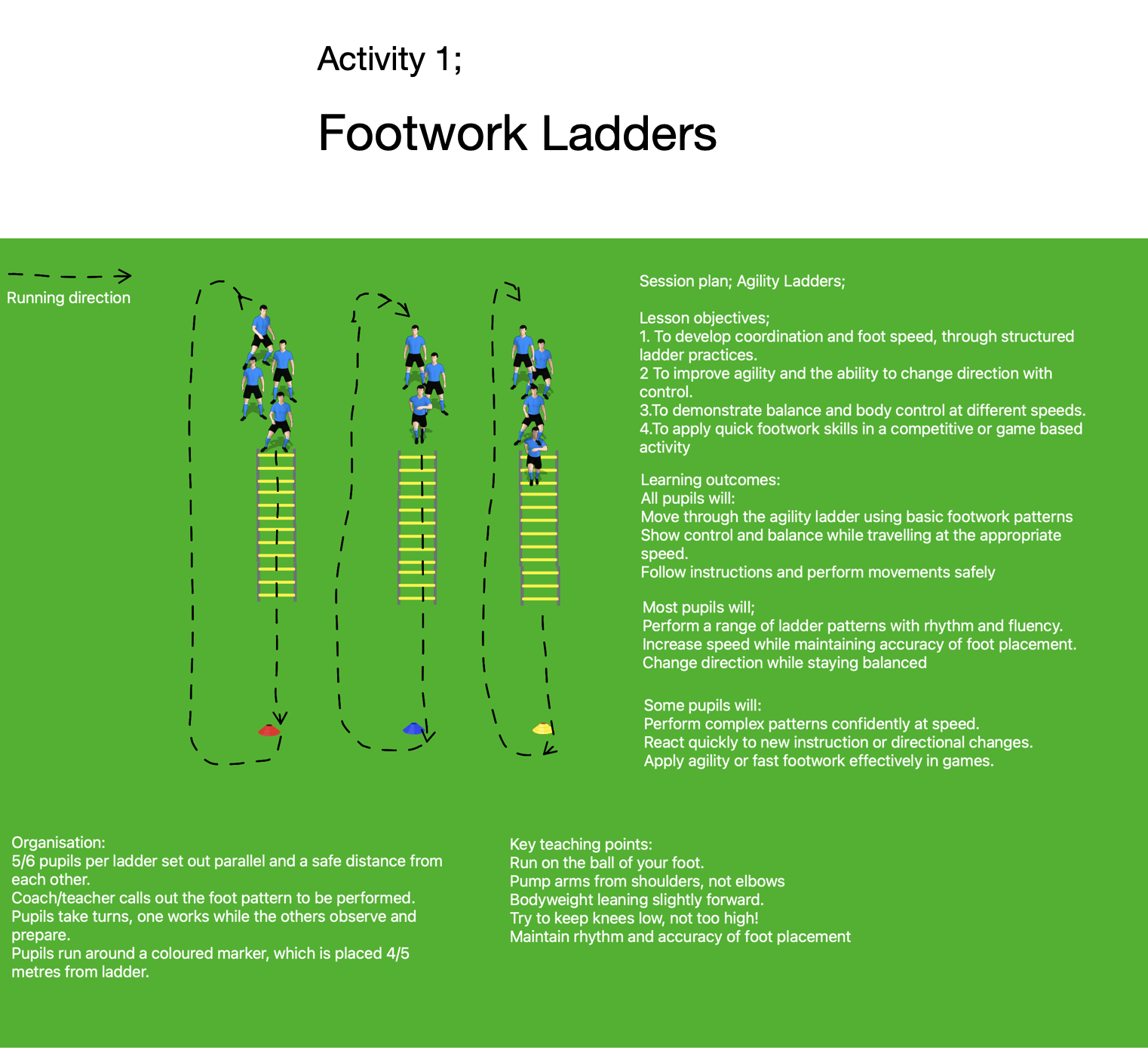
Footwork Ladders Part 1
Our footwork ladders are a key part of our programme and underpin performance across all sports. These engaging drills develop agility, coordination, balance and quick reactions, helping pupils improve movement efficiency and overall athletic ability. By building strong footwork foundations in a fun and progressive way, we support confidence, speed, and transferable skills that benefit every area of physical activity.Download Session Plan
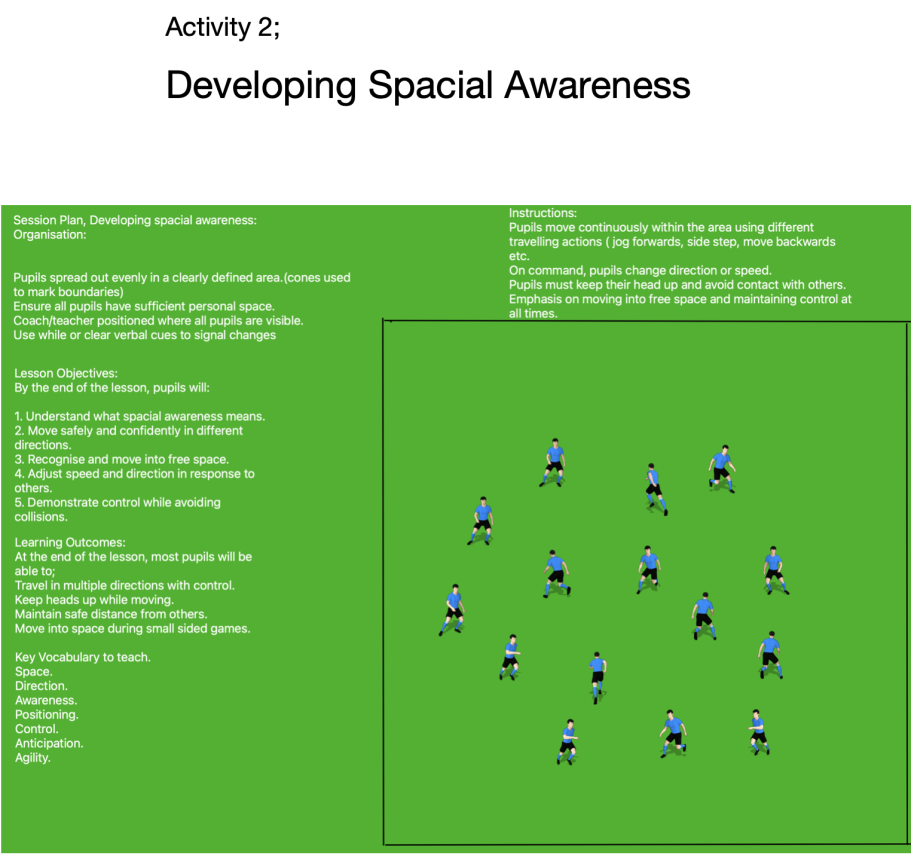
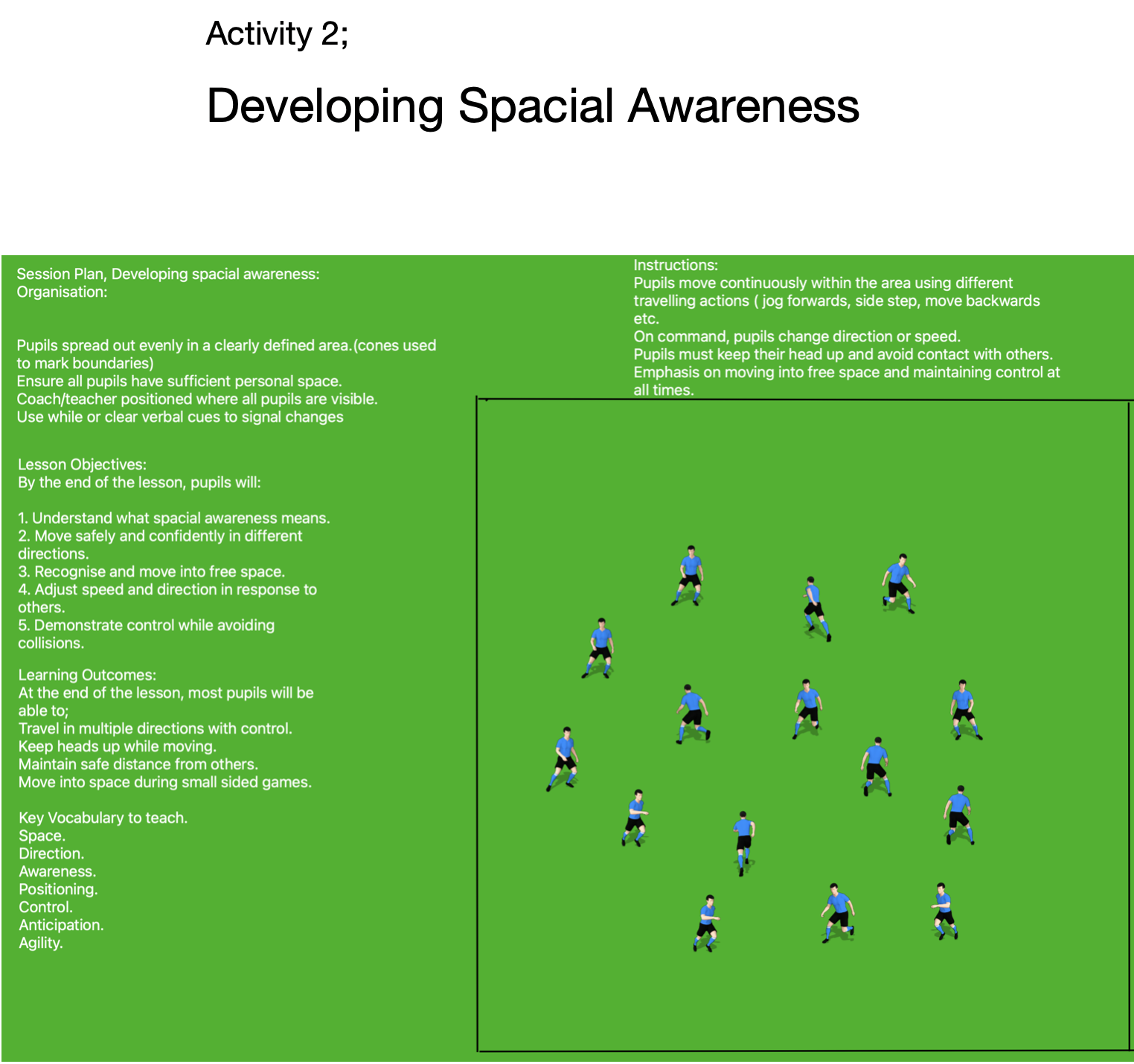
Developing Spacial Awareness
Spatial awareness is vital in sport as it helps pupils understand where they are in relation to teammates, opponents, and boundaries. It improves positioning, decision-making, timing, and safety, enabling children to move confidently, use space effectively, and perform more successfully across all sport. Download Session Plan
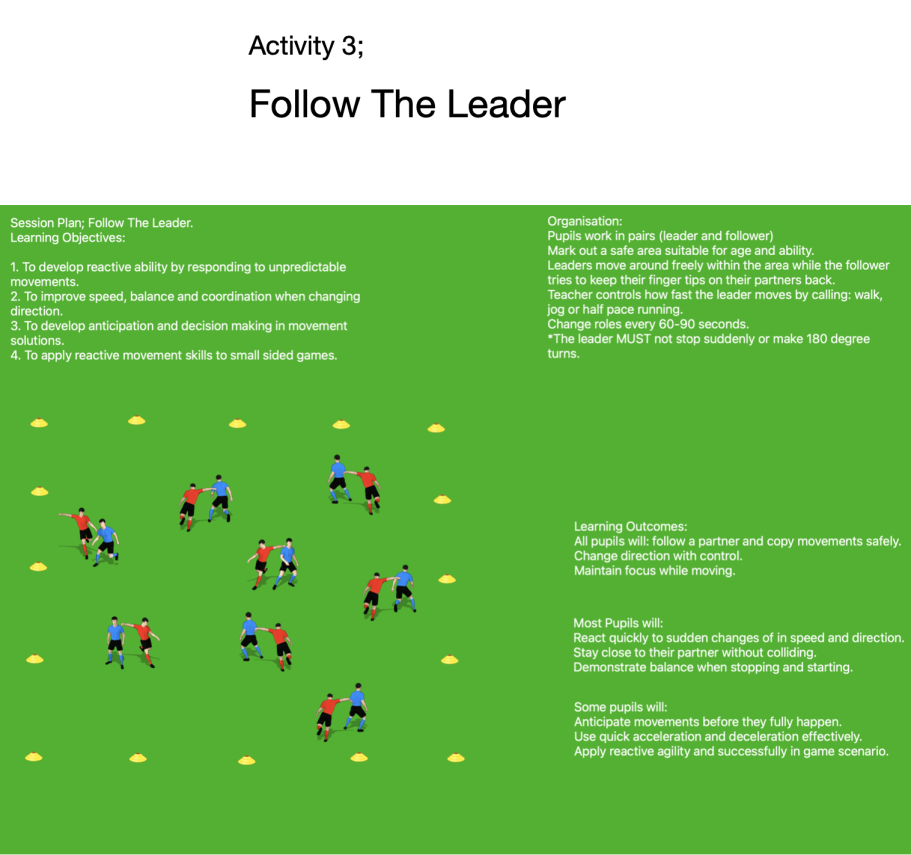
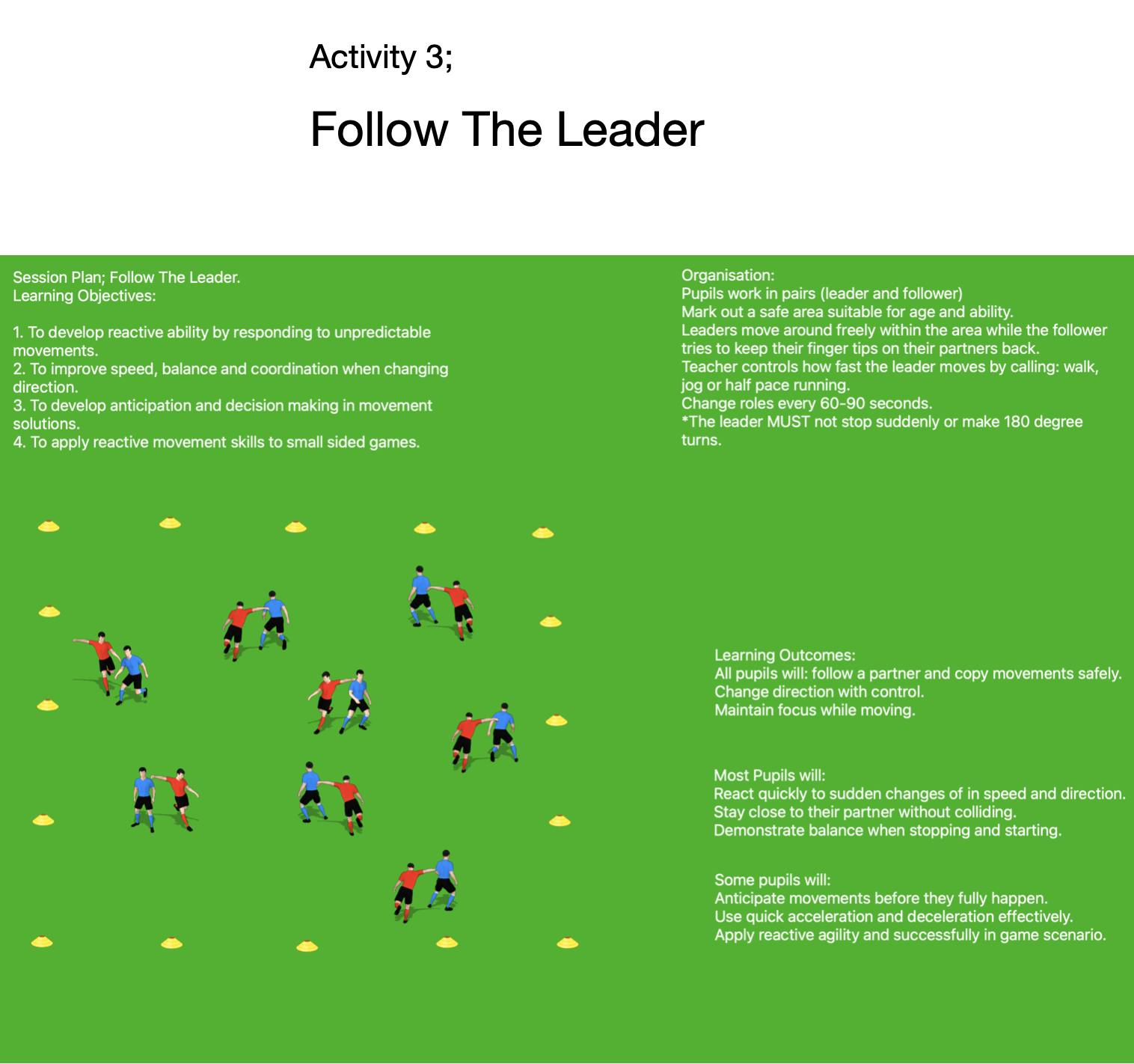
Follow The Leader
This activity develops partner led reactive agility, the ability to respond to unpredictable movement. Research shows this is more important for sport than pre-planned drills. By constantly observing and reacting, pupils build quicker reactions and stronger anticipation, gaining the split-second advantage that creates space and makes the difference in games. Download Session Plan
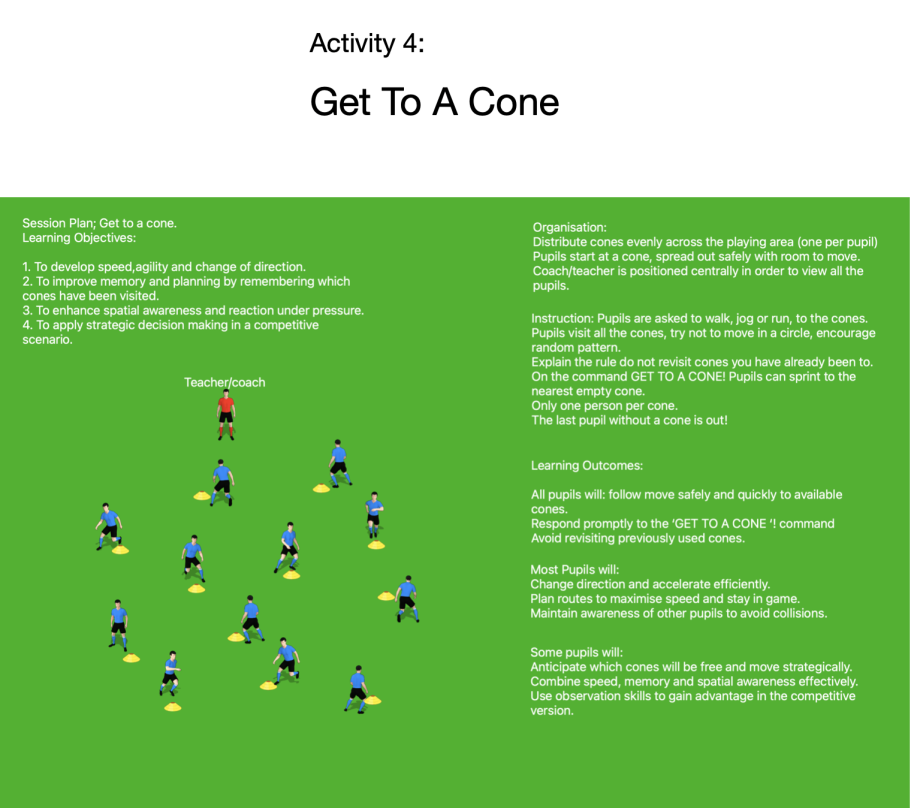
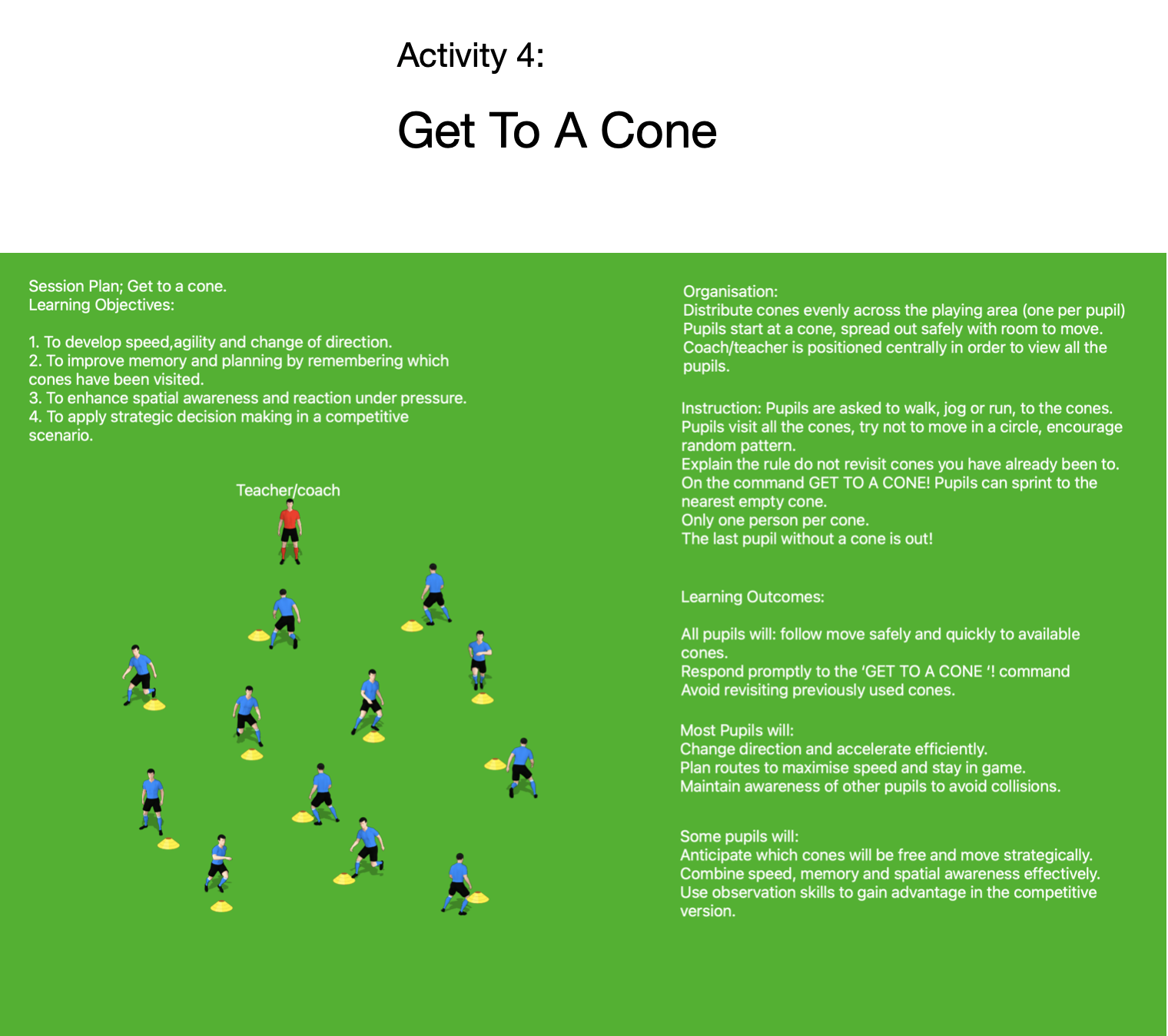
Get To A Cone
This game challenges children to make smart decisions under fatigue. It develops true reactive speed, along with safe acceleration and deceleration skills that help prevent injury. With unpredictable sprint commands, pupils must think, react, and move instantly, replicating the demands of live sport. Download Session Plan
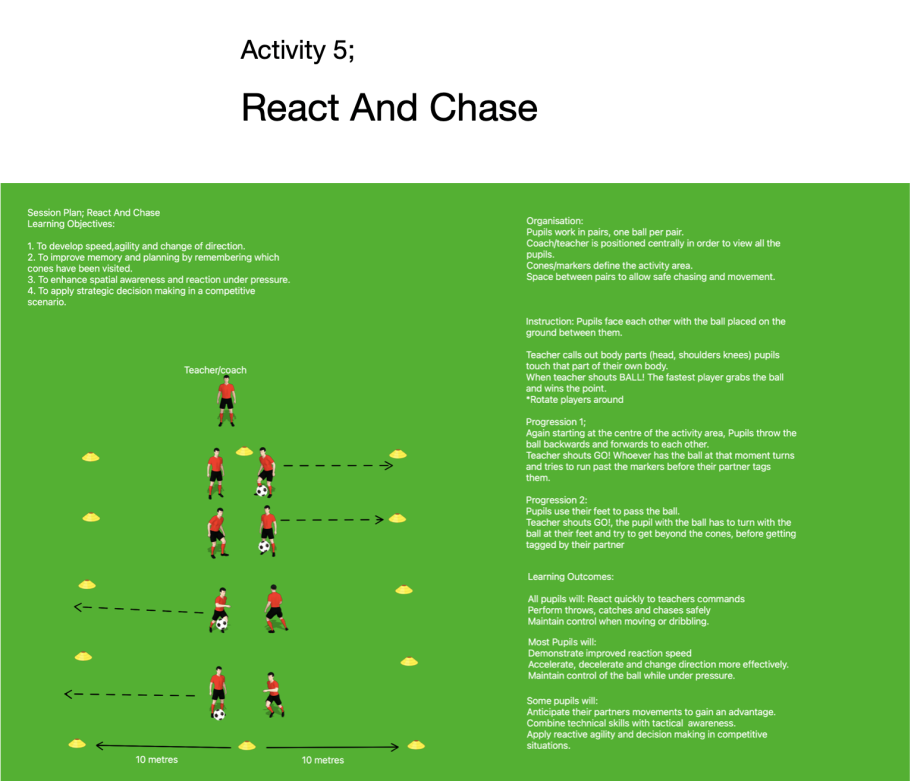
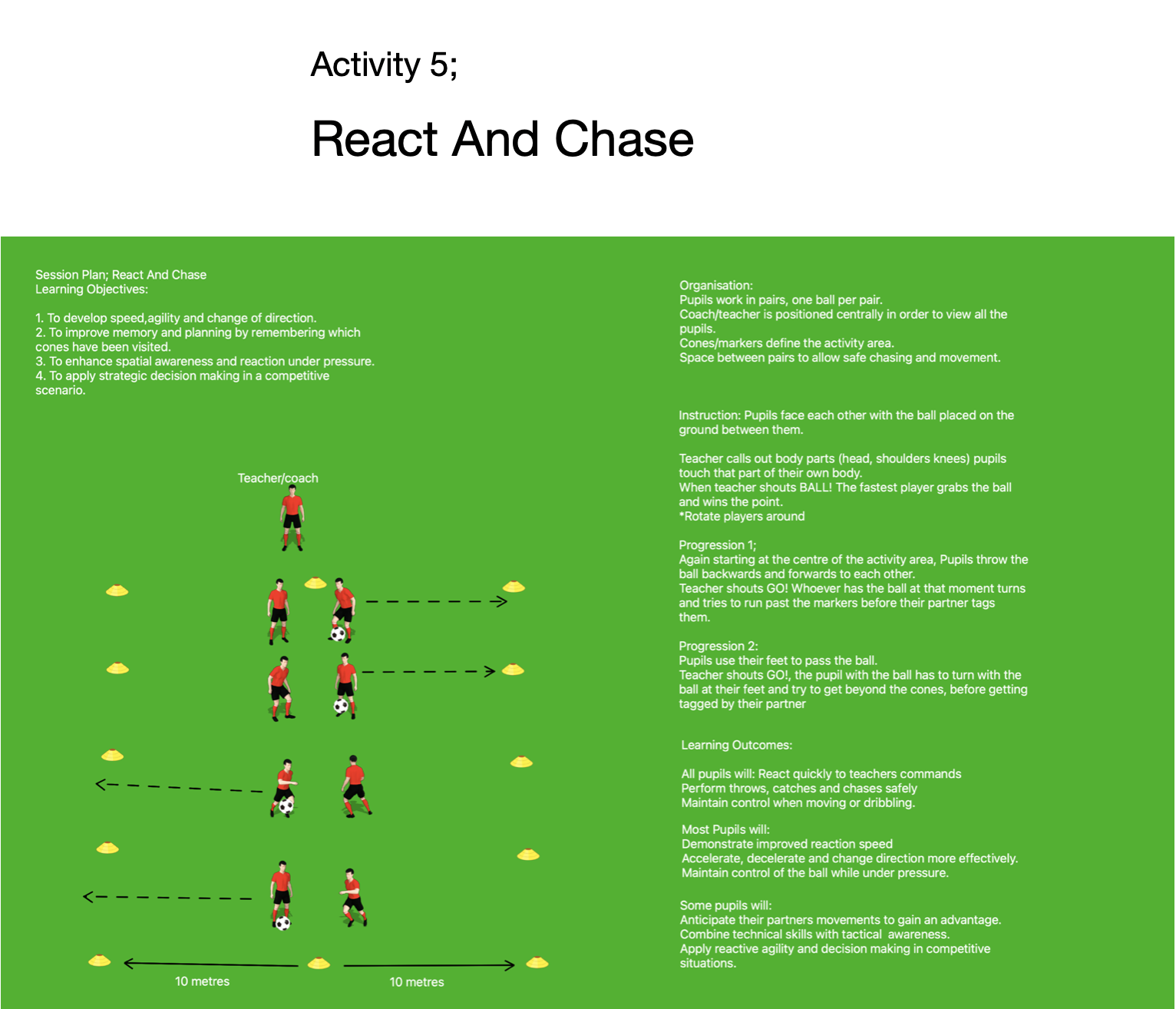
React And Chase
This practice sharpens reaction time by reducing the gap between seeing and responding. The unpredictable “BALL!” call forces genuine reactions, just like in any sport. By training explosive movement and rapid responses, we develop the speed and sharpness that help players win loose balls and close down space first. Download Session Plan.
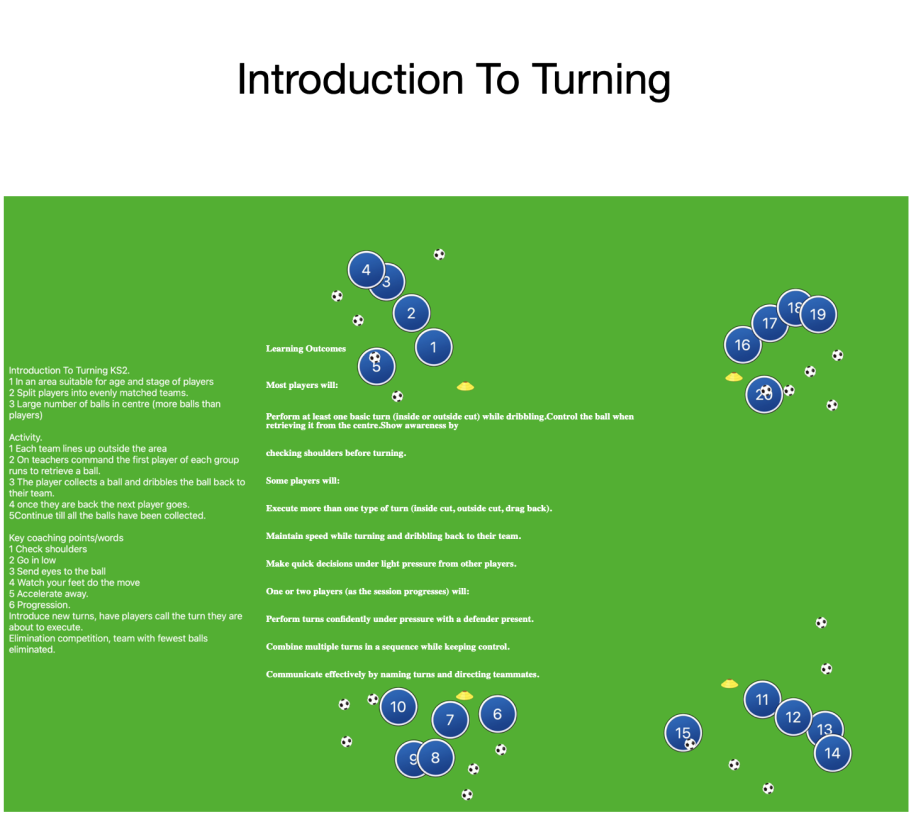
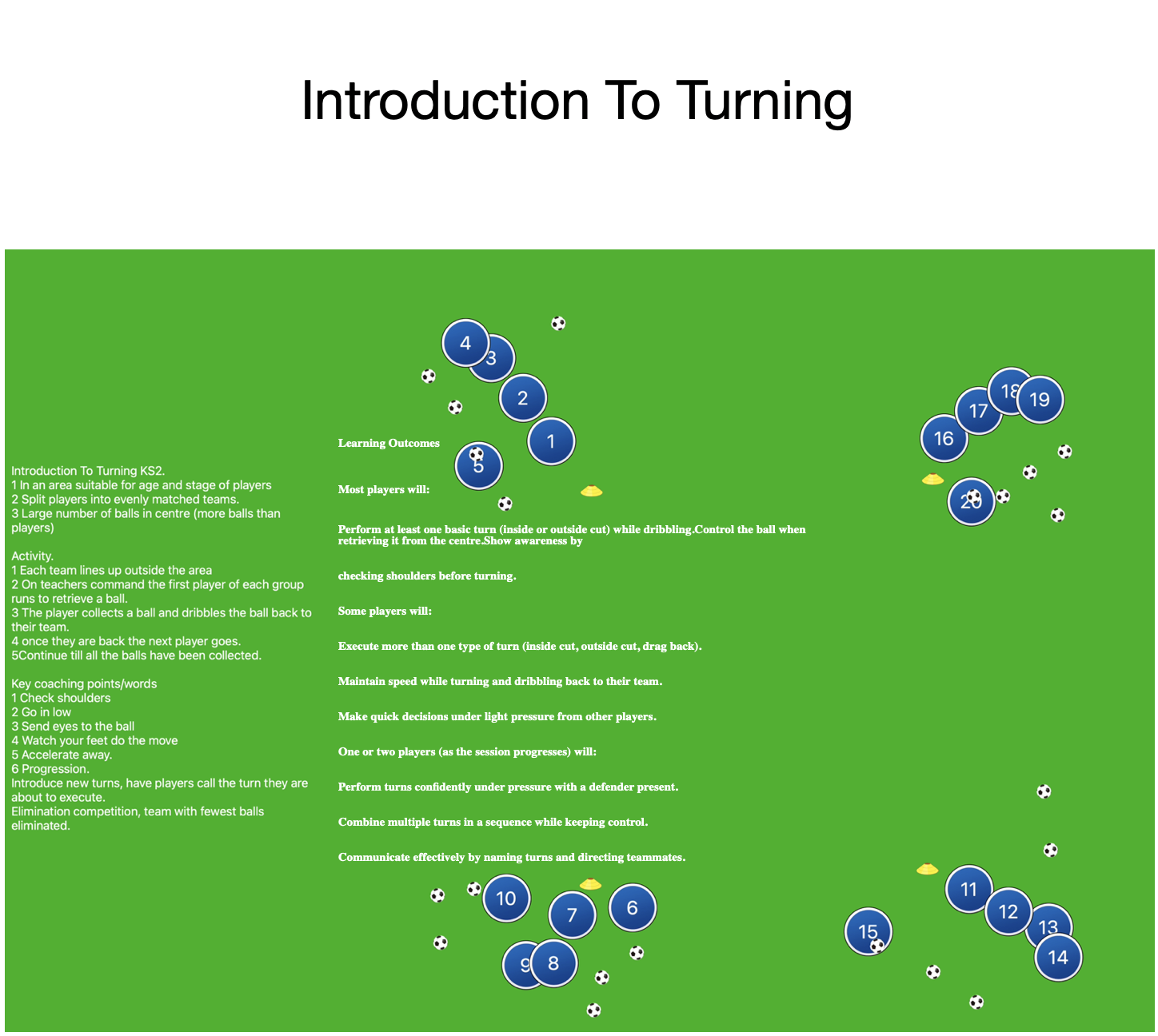
Introduction To Turning
Turning lesson is important because it prepares pupils to understand what a turn is, how to perform it, and why it is useful in games. Demonstrating the turn and highlighting key points, such as keeping the ball close, checking shoulders, and accelerating away, helps pupils grasp the skill before practising. The introduction also sets out safety, rules, and expectations, ensures pupils are focused, and links the activity to previous dribbling skills. By providing this guidance, pupils are more confident, engage fully in the activity, and are better able to achieve the learning outcomes of controlling and changing direction with the ball effectively. Download Session Plan
123 Challenge
While rooted in football, the 123 Challenge transfers seamlessly into other sports because it is built around universal principles of movement, decision-making, and competition rather than sport-specific techniques. The 1v1, 2v2, and 3v3 duels can be easily adapted to activities such as basketball, rugby, hockey, netball, or handball by simply changing some of the equipment, rules, or scoring method. This flexibility makes it a powerful tool for PE lessons, clubs, interventions, and enrichment sessions, as it keeps participation high, challenges all ability levels, and develops transferable skills such as agility, communication, problem-solving, and teamwork in a fast-paced, engaging format.

The 3Ps Physical Proficiency Philosophy for KS2
The Footy Instructor Is Part Of The Farrell Partnership
Physical proficiency means children can move confidently, safely, and effectively across a wide range of activities. Our programme builds the fundamental movement skills that underpin all sport and physical activity. Rather than just teaching children to play specific sports, we develop capable, confident movers who can adapt to any physical challenge they encounter. Read the science, click on the learn more button.
SESSION PLANS
1 Footwork Ladders
2 Developing Spacial Awareness
3 Follow The Leader
4 Get To A Cone
5 React And Chase
6 Introduction To Turning
7 123 Challenge